Managed
IT
for
Construction
Companies:
Tools
&
Support



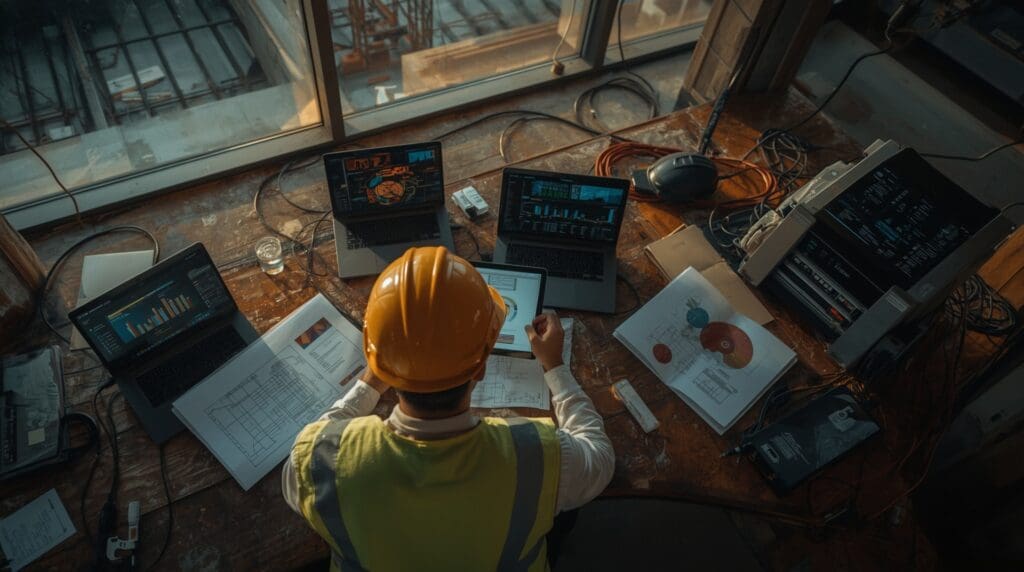
Construction companies run on tight deadlines, distributed teams, and technology that has to work in the field and the office at the same time. When your IT fails, projects stall, bids get delayed, and your crew loses time you can never get back. Managed IT services for construction companies give you a dedicated team that keeps your systems running, your data protected, and your field technology management under control, without the cost of hiring a full in-house IT department.
Whether you run a small residential contractor in Raleigh or a large commercial builder operating across multiple job sites, the right construction IT support strategy makes a measurable difference. This guide breaks down the core tools, services, and decisions you need to get your technology working as hard as your crew does.
Managed IT services means outsourcing your technology support to a third-party provider, called a managed service provider or MSP. The MSP handles monitoring, maintenance, security, and helpdesk support for a predictable monthly fee. You get enterprise-grade IT without building an internal team from scratch.
For construction companies, this model fits especially well. Your technology needs shift with each project phase. An MSP scales with you, adding resources during busy seasons and pulling back when things slow down. You pay for what you need, not what you might need someday.
Construction is not a typical office environment. Your team works across job sites, trailers, remote offices, and the road. That creates IT problems most standard support plans are not designed to solve.
Addressing these challenges requires a support model built around the construction workflow, not a generic small-business IT plan.
Field technology management refers to the practice of keeping hardware, software, and connections operational at job sites and in the field. This includes tablets, rugged laptops, mobile devices, and any connected equipment your crews use day to day.
Strong field support covers three key areas:
Mobile device management, or MDM, lets your IT provider push updates, enforce security policies, and remotely wipe lost or stolen devices. This protects project data even when hardware leaves your control.
Job sites often need internet access before permanent connections are available. An MSP can configure cellular-based routers, bonded connections, or temporary LAN setups so your crew stays connected from day one.
Remote monitoring means your MSP watches your systems 24 hours a day. If a server goes offline, a backup fails, or a device starts behaving strangely, your provider is alerted and can respond before the issue becomes a full outage.
A well-built construction IT support plan bundles several services into one monthly agreement. Each service solves a specific operational problem your team faces in the field or the office.
Construction firms are a growing target for cybercriminals. You hold sensitive financial data, project contracts, client information, and subcontractor records. A successful attack can freeze operations and cost you far more than any IT investment.
The most common threats in this industry include ransomware, phishing emails targeting accounts payable staff, and business email compromise scams. These attacks often succeed because construction teams are busy and not focused on security hygiene.
A managed IT provider layers your defenses with endpoint protection, email filtering, multi-factor authentication, and continuous monitoring. You do not have to become a security expert. You just need a partner who already is one.
Get a free assessment of your current IT setup and a straightforward recommendation. No ticket queue, no call center, just a conversation about where your systems stand today.